On 10 November Henry Wirtz, the commander of a Confederate POW camp near Andersonville, Georgia was hanged. He was blamed for the terrible conditions in the camp but his execution is controversial.
Tuesday, 10 November 2026

Monday, 9 November 2026
The Night of Broken Glass
9-10 November 1938 was the night of broken glass in Germany. During anti-Jewish rioting 36 people were killed, 7,000 shops were looted and 267 synagogues were burnt down. A leading Nazi Hermann Goering said 'They should have killed more Jews and broken less glass'.
Sunday, 8 November 2026
The end of Capital Punishment in Britain
On 8 November 1965, in Britain an act to abolish the death penalty for murder received the royal assent, making it law. Capital punishment for murder was permanently abolished in 1969.
Friday, 6 November 2026
Franz Muller
Franz Muller, a German, was the first person to murder someone on a train in Britain. Muller was born on 31 October 1840. He became a tailor. In 1864, he was living in England but he struggled to make a living.
At that time, trains were divided into carriages, without connecting corridors. On 9 July 1864, a train was travelling between two railway stations in North London, Fenchurch Street and Hackney. It arrived at 10.11 pm. Two men entered a carriage and they immediately spotted blood. They called the guard who also saw blood. He found a stick, a beaver skin hat and a bag. The carriage was sealed and it was sent for examination.
At 10.20 pm a train was travelling in the other direction when the crew spotted the body of a man lying by the track. The man was still alive but he died of head injuries the next day. He was identified as 69-year-old Thomas Briggs, a chief bank clerk. Mr Briggs had been beaten and thrown off the train. Whoever killed him had stolen his gold watch and chain, but failed to take £5 (a large sum of money at that time) from his pocket.
Thomas Briggs ’ relatives identified the bag and the stick found in the carriage but they did not recognise the hat.
It seems that in his hurry, the attacker had taken the wrong hat, leaving his behind. He also failed to search the victim’s pockets.
A jeweller named John Death said that a man with a German accent came to his shop on 11 July, two days after the murder and sold him a gold watch chain (but not the watch). The chain was identified as belonging to the victim. A reward of £300 was offered for anyone who gave information leading to the arrest of the murderer.
A cabdriver named Jonathan Matthews didn’t hear about the murder until nine days after it happened. Matthews said he didn’t read newspapers, as they were expensive. He knew Franz Muller, and he became suspicious. Muller had given his youngest daughter a box from Death’s jewellers. Matthews took it to the police. Fortunately, he also had a photo of the suspect. The police took the hat found in the carriage to Muller’s landlady. She confirmed that it was his. He had foolishly left it behind and taken the victims.
Muller had boarded a ship to the USA on 15 July but two policemen boarded a faster ship and they arrived in New York before Muller. When the ship carrying Muller arrived, they boarded and arrested him. Among his luggage they found Thomas Brigg’s watch and his hat (although it had been altered, it was still identifiable). Muller was then extradited to stand trial in Britain.
The trial began on 27 October 1864. Muller denied being on the same train as the victim but the jury did not believe him. Muller was sentenced to death and he was hanged on 14 November 1864.

Thursday, 5 November 2026
Burke and Hare - they murdered people then sold the bodies
Burke and Hare are often called grave robbers. In reality, they did not rob graves. Instead, they murdered people and then sold the victims’ bodies to surgeons for dissection. Today, many people donate their bodies to science but in the early 19th century, attitudes were very different. Most people were horrified by the idea of being cut up after they were dead. As a result, surgeons found it hard to find bodies to dissect in lectures. So some were willing to pay large amounts of money for dead bodies, without asking too many questions. Burke and Hare are believed to have murdered 16 people.
William Burke was born in Ireland around 1792, and it’s believed he came to Scotland to work as a navvy on the canals. He eventually settled in Edinburgh, where he worked as a cobbler, repairing shoes. It’s not certain when William Hare was born. He was probably from Ireland. At any rate, by 1827, he owned a lodging house in Edinburgh and he had befriended William Burke.
The murders began in stages. In November 1827, a boarder known as Old Donald died in Hare’s lodging house. He died owing £4 (a considerable sum of money in those days). Hare told Burke and they decided to sell the body to anatomists to recoup the money. They told the authorities that Old Donald was dead. A carpenter made a coffin for him. Burke and Hare filled it with bark (normally used for tanning). They sold the body to a surgeon, Dr Robert Knox, for £7 and 10 shillings (there were 20 shillings in a pound). So they made a handsome profit from his death.
The next step was to murder a man who was ill but still alive. A tenant called Joseph, a miller, fell ill with an infectious disease. That would drive away other tenants from the lodging house. The two men gave Joseph whisky, then suffocated him.
This time, Burke and Hare sold the body for £10. Suffocating him meant there were no marks on the body. When the body was dissected, it would not be obvious that the person had been murdered.
Burke and Hare began regularly killing people and selling the victims’ bodies. It’s not certain in what order they killed the victims, but the third victim was probably a woman named Abigail Simpson. In February 1828, she was lured to the lodging house and given whisky. She was then suffocated. Once again, they sold the body for £10. Over the next months, Burke and Hare continued luring people to the lodging house, giving them whisky, then suffocating them, and then selling the bodies.
One of the victims was a mentally disabled man, James Wilson. He was called ‘Daft Jamie’. He was well known in Edinburgh. He was often seen begging. The unfortunate man was lured to the lodging house, where he was given whisky and suffocated. They sold the body, as usual, but this time several medical students recognised the dead person. Local people also noticed James was missing. Dr Knox likely suspected the truth because he ordered the immediate dissection of James’ body. Like so many other murderers, Burke and Hare became overconfident and started being careless.
The last victim was an Irishwoman named Margaret Docherty. She was murdered on 31 October 1828. Burke and Hare befriended her. She was invited to stay at the lodging house. Two other lodgers, James and Ann Gray, were told they must move out to make room for her. Margaret Docherty was suffocated in the usual way and her body was hidden under some straw. The Grays returned the next day to collect their belongings. They were left alone in the house and they looked under the straw, discovering the dead body.
The Grays immediately alerted the authorities but while they were away, Burke and Hare removed the body and took it to be dissected.
On 3 November, Burke and Hare were arrested. But the authorities were not sure if they could secure convictions.
So Hare was offered immunity from prosecution if he turned King’s evidence, that is if he testified against Burke. On 25 December 1828, William Burke was found guilty of murder and he was sentenced to death.
He was hanged in public in Edinburgh on 28 January 1829. Burke’s body was publicly dissected, as his victims' bodies were. His skeleton was given to the Anatomical Museum of the Edinburgh Medical School.
William Hare moved to England. What happened to him after that is not known. No action was taken against the surgeon, Dr Robert Knox.
The dreadful crimes were remembered in a rhyme:
‘Burke's the butcher, Hare's the thief, Knox the boy that buys the beef’
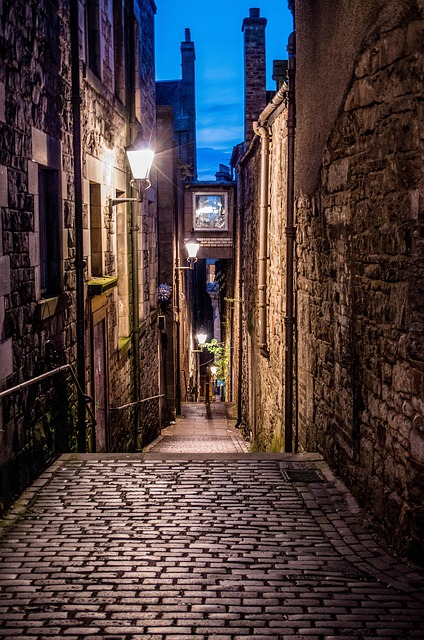
Wednesday, 4 November 2026
The Pillory
The pillory was a wooden frame on a pole with holes through which a person’s head and hands were placed. The frame was then locked, and the person was subjected to humiliation. The stocks were a wooden frame with holes through which a person’s feet were placed, and they were humiliated in the same way.
The use of the pillory and stocks went out of favour in the 19th century. The pillory was abolished in Britain in 1837, and the stocks were last used in 1872.
Tuesday, 3 November 2026
Tyburn
On 3 November 1783 a highwayman named John Austin became the last person to be hanged at Tyburn, London.
Subscribe to:
Posts (Atom)